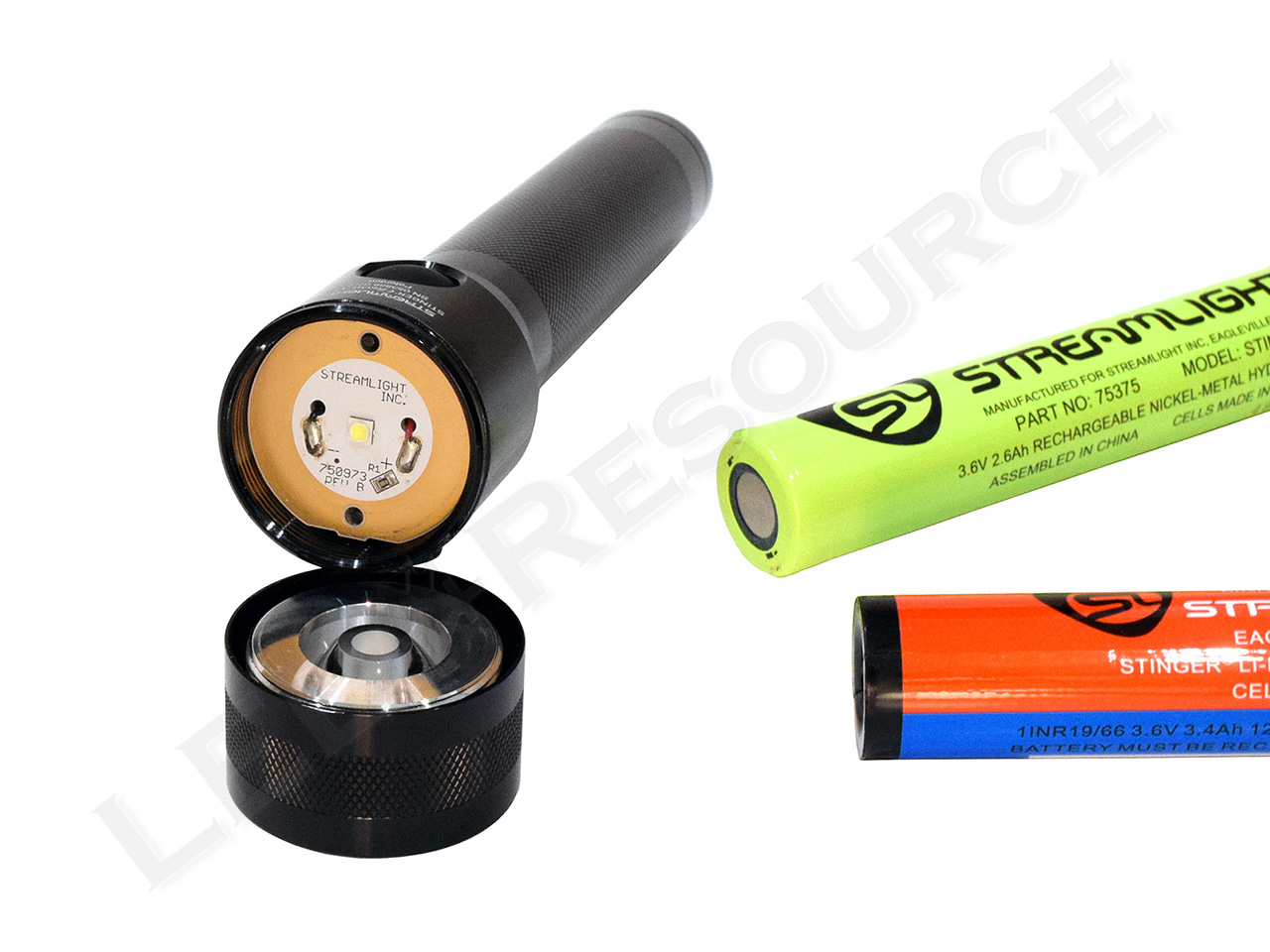
 Since its debut over 30 years ago, the Streamlight Stinger family has seen multiple upgrades in LED technology, battery chemistry, and electronics that delivers higher output and longer runtime. Despite the continued use of nickel-based rechargeable technology, a lesser-known lithium-ion replacement battery has been available since 2015 but without any published performance claims. In this technical deep dive, we will trace the evolution of Stinger batteries, clarify part numbers and specifications, and analyze performance differences between these battery options.
Key Specifications
- Capacity (NiMH): 2,600mAh
- Capacity (Lithium-Ion): 3,400mAh
- Weight (NiMH): 5.4 oz.
- Weight (Lithium-Ion): 2.7 oz.
- Cycle Count: 1,000
- Length: 5.1″
- Diameter: 0.9″
- Warranty: 2 years
- MSRP: $33-47
- Actual Pricing: ~$21-36
Pricing & Contents
Replacement NiMH batteries can be purchased directly from Streamlight’s online parts store or from authorized distributors, however the lithium-ion battery is sold as an accessory and can only be purchased from an authorized distributor. No current Stinger models can be ordered in a configuration that comes with the lithium-ion battery pack.
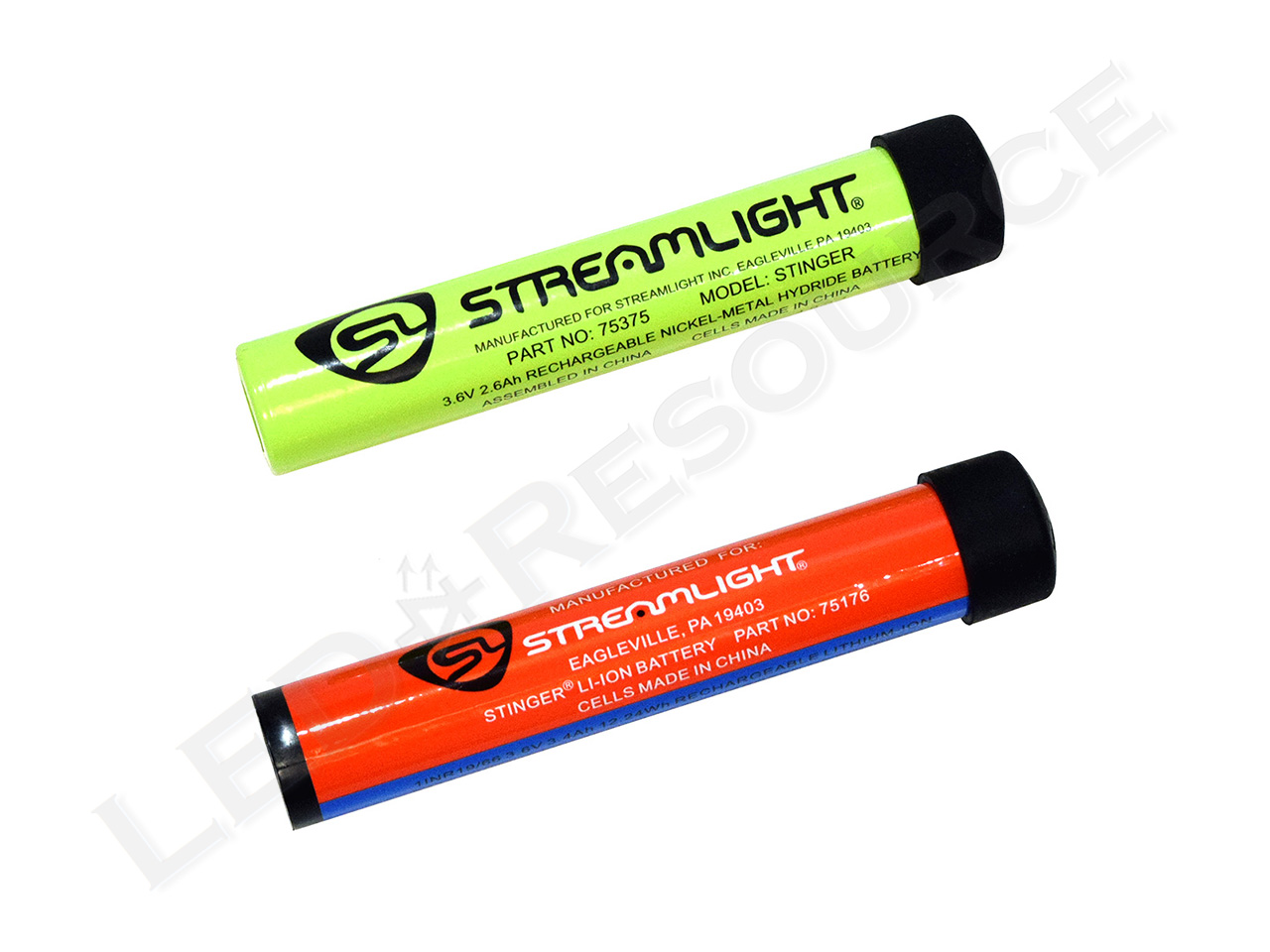
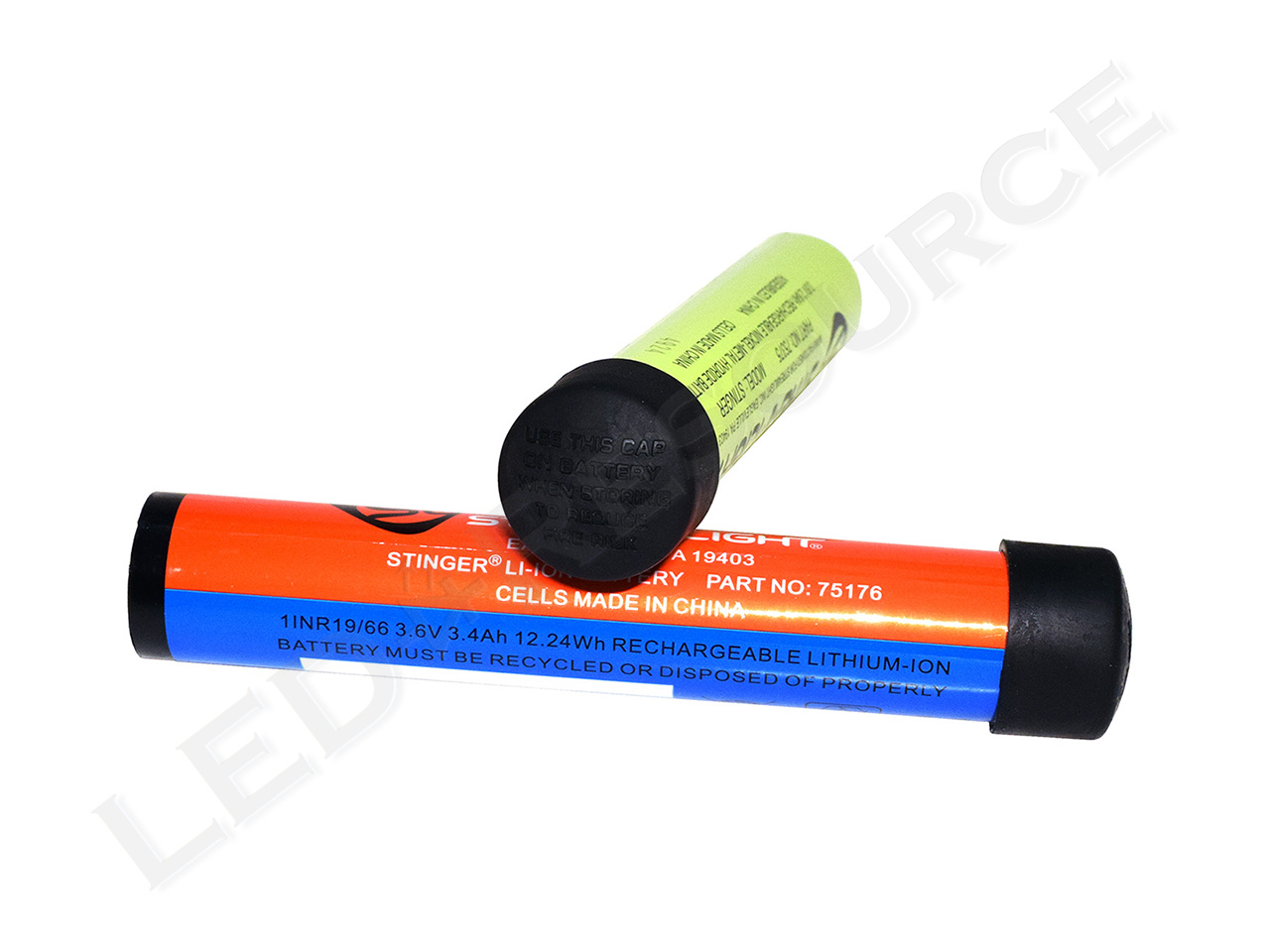
History
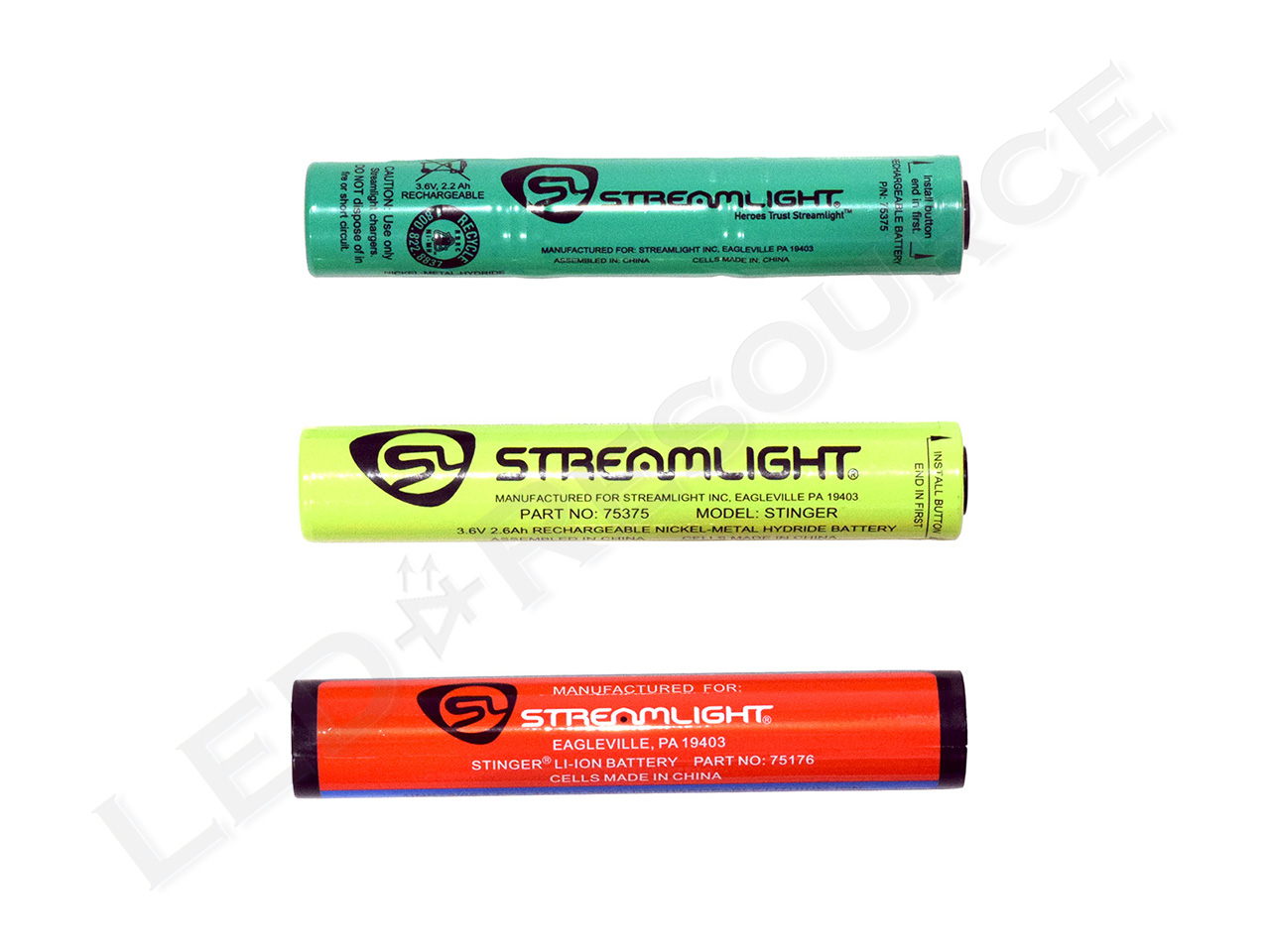
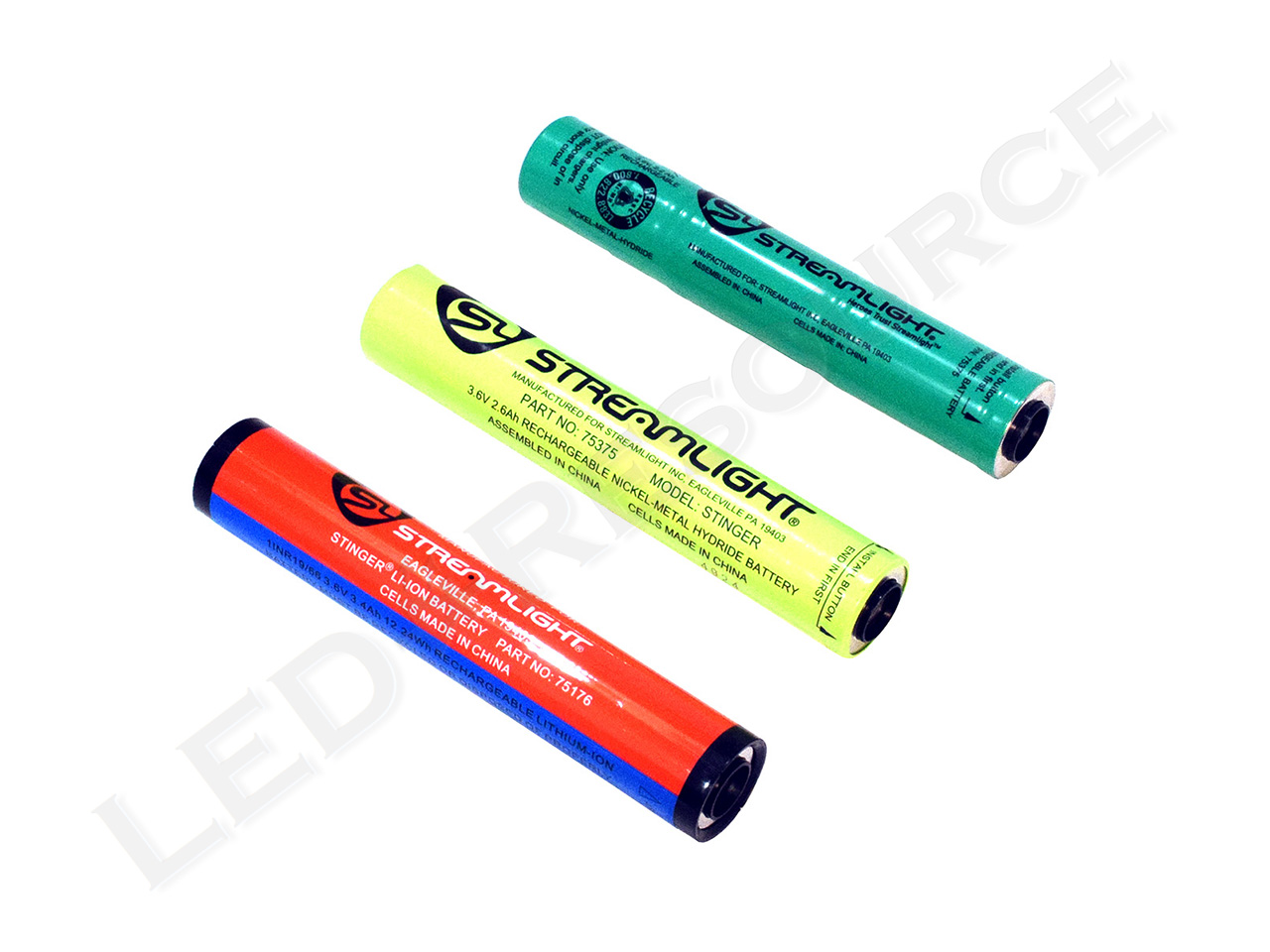
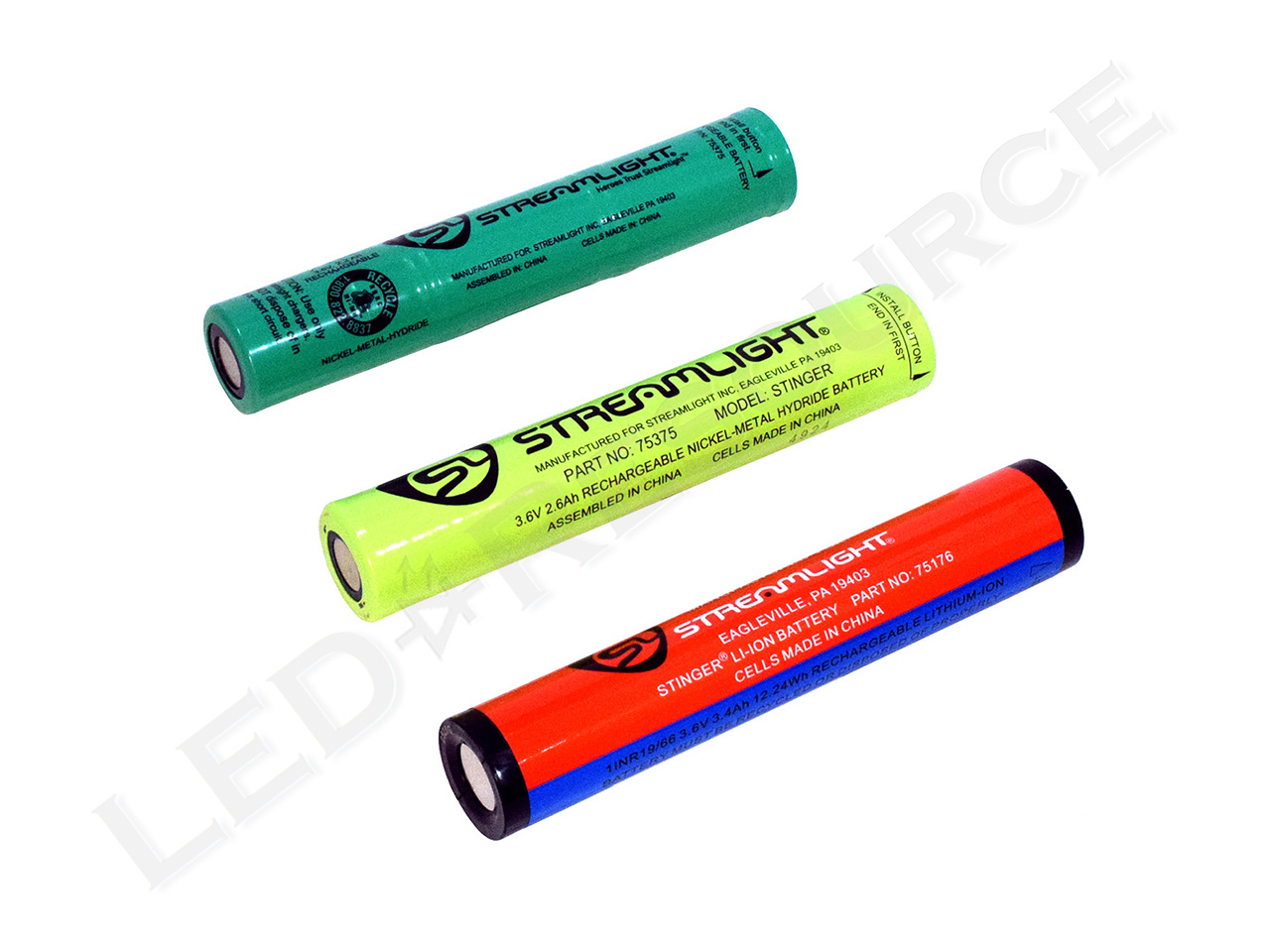
Stinger batteries have been updated over the years but the part numbers remain unchanged, so specifications will depend on the purchase date of your Stinger or the version of a product info/data sheet being referenced. Based on our experience and information that we could source, below is the list of battery variants along with the approximate release date:
| Part Number | Capacity | Release | Details |
| 75175 NiCd |
1,800mAh | 1993 | Older lights were originally shipped with these batteries. Cadmium is a toxic heavy metal and has been substantially banned globally since the mid-2010s. Streamlight discontinued these around 2016 and no longer supports this type of battery. |
| Part Number | Capacity | Release | Details |
| 75375 NiMH |
2,200mAh | 2011 | This was the original version. We compared it with the NiCd battery as part of our Stinger DS LED (180 Lumens) review. Compared to the NiCd at 5.9 oz, the NiMH is also a lighter weight option at just 4.9 oz. |
| 2,600mAh | ~2018 | Updated with higher capacity and weight increased to 5.4 oz. Battery label changed from green to yellow-green. | |
| 2,600mAh | 2024 | Battery label changed to the style shown in this review but specifications remain unchanged. |
| Part Number | Capacity | Release | Details |
| 75176 Lithium-Ion |
2,200mAh | 2015 | This was the original version. |
| 2,600mAh | ~2018 | Updated with higher capacity (similar to the Strion’s 74175). | |
| 3,400mAh | ~2025 | Updated with higher capacity. |
Runtime – Older Stinger Models
If you haven’t read our article about runtime graphs and the ANSI FL1 Standard, please click here.
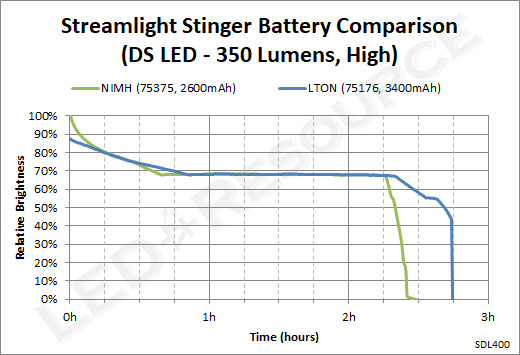
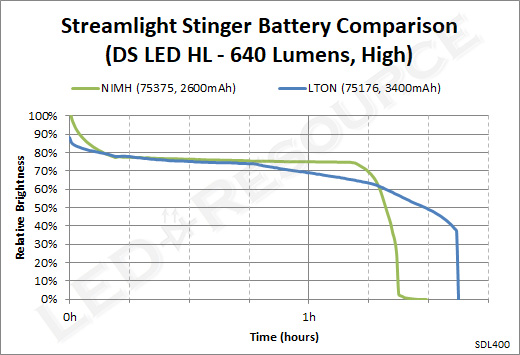
Based on specifications alone, it would be easy to expect that a 3,400mAh battery should simply have 30% longer runtime compared to one with 2,600mAh. However, because these batteries utilize different chemistries, so we also need to consider how discharge characteristics affect the unregulated part of the runtime. When runtime is regulated, output is maintained regardless of battery voltage and this can be seen in the middle part of the runtime graph highlighted below. Both the initial output and end behavior are areas of unregulated output.
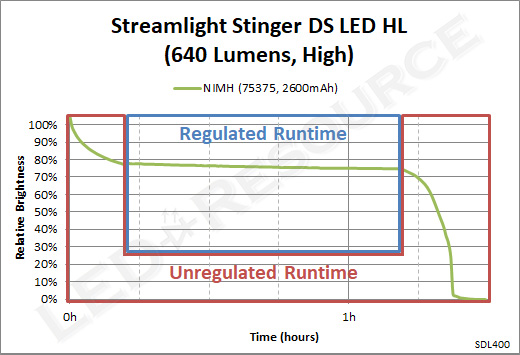
In general, NiMH maintains more stable voltage throughout the discharge before dropping rapidly once depleted. Lithium-ion has a more linear decline until reaching the cutoff voltage, which is when the internal circuitry protects the cell from overdischarge. When the lithium-ion is used, this difference results in two distinct behaviors in the unregulated runtime: initial output is lower by ~10-15% and the decline in output at the end is less rapid. Additionally, because of the protection citcuit, the light will eventually shut off and must be recharged before it can be used again.
Runtime – Newer Stinger Models
To compare the performance of these batteries in a current generation light, we used a Stinger Classic LED that was manufactured in 2025 and uses the latest flip chip version of the Cree XP-G2.
In contrast to older models that utilize a simpler regulation scheme, newer lights use digital regulation that provides better control of the light’s output, especially in the unregulated area towards the end of the runtime.
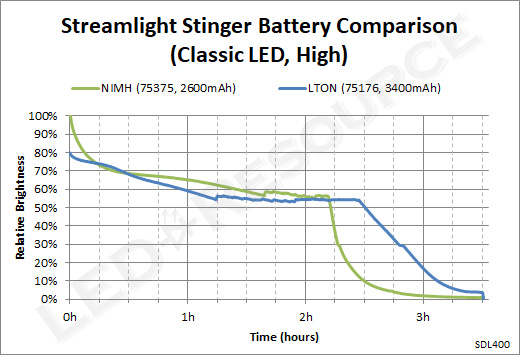
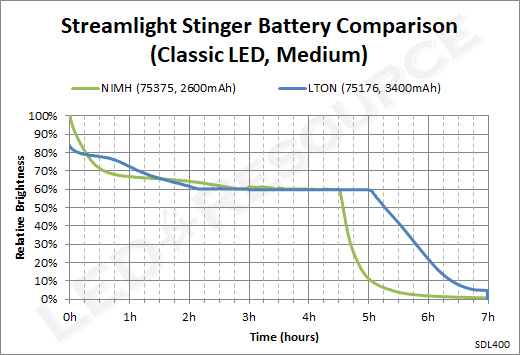
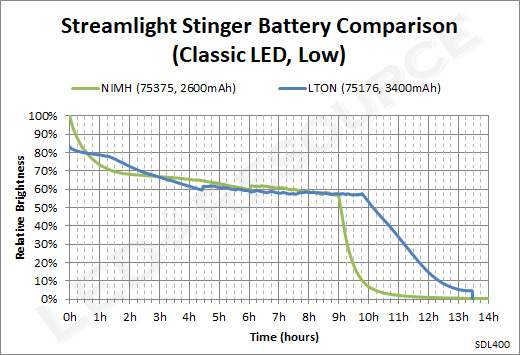
Instead of an abrupt drop in output with the NiMH battery like the older lights, the Stinger Classic LED has a longer usable runtime towards the end when output is unregulated. Regulated output is only slightly extended when the higher capacity lithium-ion battery is used, but the main difference is how it loses output more slowly compared to the NiMH battery as the battery is depleted.
Longevity
While both batteries are rated for 1,000 cycles, our experience with Stinger and Strion batteries shows that lithium-ion tends to have better overall longevity than NiMH. After tested our oldest batteries that had been featured in past reviews, the following was what we found:
| Part Number | Details |
| 75175 NiCd |
None of our Stinger batteries from 2011 are still functional. |
| 75375 NiMH |
Most of our Stinger batteries from 2011 to 2013 no longer hold a reasonable charge. |
| 74175 Lithium-Ion |
With the exception of one 2,000mAh battery from 2011, all Strion batteries from 2011 to 2013 still hold a reasonable charge. |
For low-usage scenarios where charge cycles are less frequent, NiMH batteries can be damaged by overdischarge. Low self-discharge NiMH cells still have more self-discharge compared to lithium-ion, so letting one sit in a flashlight for too long or forgetting to recharge the light after extended use can create problems.
For high-usage scenarios where one or more charge cycles may be expected per day, lithium-ion batteries are able to tolerate a higher number of shallower discharge cycles than the rated cycle count (which are full discharge cycles).
As batteries age, capacity is lost over time and the failure of any one cell in a multi-cell battery pack will render it unusable. This is usually how multi-cell battery packs fail, so the lithium-ion battery has the advantage of being single-cell compared to the NiMH battery which has three sub-C cells in series.
Conclusion
Choosing between NiMH and lithium-ion batteries for the Streamlight Stinger will end up being a decision about tradeoffs. As the default choice, the NiMH battery provides performance that meets the published ANSI FL1 claims for your Stinger. The lithium-ion battery is an alternative option that increases total usable runtime, reduces weight, and should have a longer service life. These benefits do come at the expense of initial light output as well as a slight price premium over the NiMH battery, but the most recent 3,400mAh lithium-ion battery is worth considering as an upgrade if its advantages align with your priorities.
| NiMH | Lithium-Ion | |
| Pros |
|
|
| Neutral |
|
|
| Cons |
|
|